
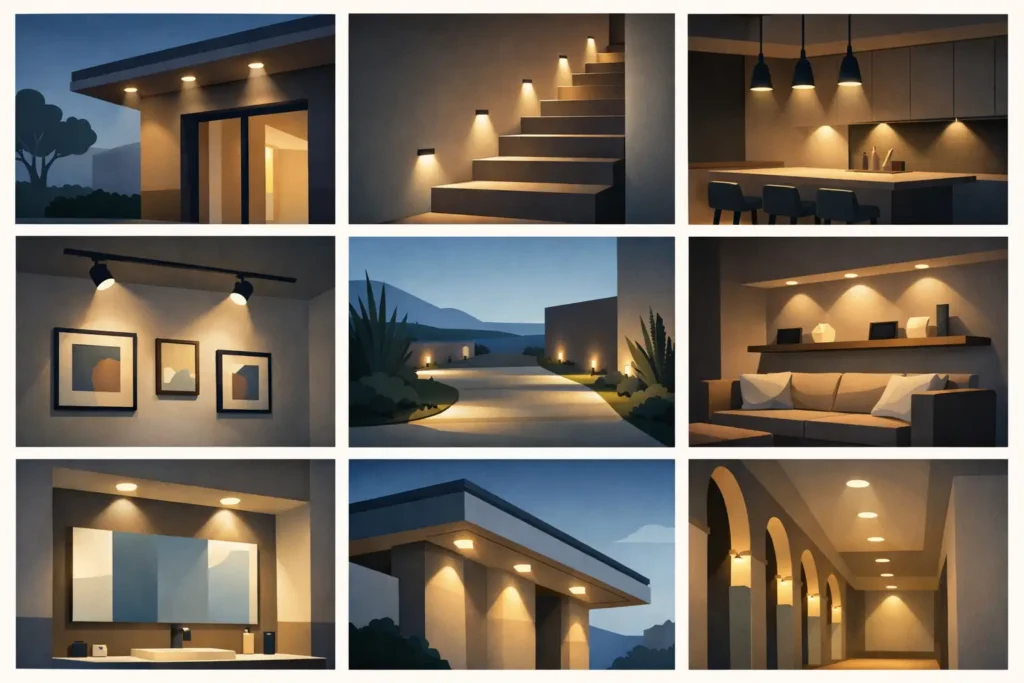
When the sun drops in Arizona, the right exterior lighting can make a property look finished, inviting, and far more memorable. The best architectural downlighting ideas do more than brighten a wall – they shape how your home or business is seen, improve security, and create a polished nighttime look without the clutter of temporary fixtures.
Downlighting works because it feels natural. Instead of blasting light outward at eye level, it casts illumination from above, which softens the effect and highlights the architecture itself. That matters whether you want a cleaner roofline, a more welcoming patio, or a storefront that still looks sharp long after sunset.
Why architectural downlighting ideas matter
A lot of outdoor lighting ends up doing one of two things wrong. It either disappears completely and leaves the property flat at night, or it overlights the space and creates glare. Good downlighting lands in the middle. It adds definition, contrast, and visibility while still letting the architecture lead.
For homeowners, that can mean making stonework, stucco texture, entryways, columns, and covered patios stand out in a subtle way. For businesses, it can help signage, façade details, and customer approach areas feel more intentional. In both cases, downlighting supports security and atmosphere at the same time.
That balance is especially important in places like Phoenix, Scottsdale, Chandler, and the surrounding Arizona communities, where outdoor living is part of everyday life. People use patios, courtyards, driveways, and commercial outdoor spaces year-round. Lighting should keep up.
1. Highlight rooflines without making them look harsh
One of the strongest architectural downlighting ideas is using fixtures along the roofline to wash light downward over the face of the building. This gives the structure a crisp silhouette at night and helps define peaks, overhangs, trim, and entry points.
The key is restraint. Too much brightness flattens the façade and can make the home look more commercial than residential. A cleaner approach is to use evenly spaced, professionally installed lighting that follows the architecture and keeps the glow controlled. On a modern home, this can look sharp and dramatic. On a more traditional home, it feels warm and refined.
For commercial buildings, roofline downlighting can make the property easier to spot from the street while still looking upscale. It is one of the easiest ways to improve nighttime curb appeal without adding bulky visible fixtures.
2. Frame the front entry so it feels welcoming
Your front door should not disappear after dark. Downlighting over the entry creates a clear focal point and makes the home feel safer and more inviting for family, guests, and deliveries.
This works especially well on homes with covered porches, arched entries, or layered exterior details. Instead of relying on one bright porch light, architectural downlighting can spread illumination more evenly across the door, adjacent columns, and surrounding trim. The result feels intentional rather than purely functional.
There is also a practical side. Better visibility around locks, steps, and package areas is useful every night, not just during the holidays or when company is coming over.
3. Add depth to patios, ramadas, and outdoor living areas
In Arizona, patios are not an afterthought. They are living space. That is why some of the most effective architectural downlighting ideas focus on covered outdoor areas where people actually gather.
Downlighting on a patio cover, pergola edge, or ramada can make the space feel finished without the visual clutter of hanging temporary lights. It creates ambient light for dinners, conversation, and relaxing outside while keeping the source subtle.
This is one of those areas where color control can make a big difference. Warm white works beautifully for everyday evenings, while programmable options let you switch the mood for holidays, game days, birthdays, or neighborhood events. The same installation can feel calm on a Tuesday and festive on a Saturday night.
4. Use downlighting to emphasize texture
Stucco, stone, brick, wood accents, and decorative masonry all react differently to light. When placed correctly, downlighting reveals those textures and gives the exterior more dimension.
This is where placement matters more than raw brightness. A smooth wall may only need a gentle wash. A rough stone veneer can handle stronger shadow play and often looks better with slightly more contrast. If the light is too intense, though, the texture can start to feel busy instead of elegant.
That is why professional layout matters. The goal is not just to add light. It is to shape what people notice first when they look at the property.
5. Improve security without making the property feel overlit
Security lighting gets a bad reputation because many systems are too aggressive. Floodlights can create glare, blow out details, and make a home feel more exposed than protected. Downlighting gives you another option.
Installed along key exterior lines, it can improve visibility around doors, garages, side yards, and walkways without making the entire property feel like a parking lot. You get a cleaner visual effect, fewer harsh shadows, and better everyday usability.
For businesses, this matters even more. Customers and employees need to feel safe approaching the building at night, but the property should still look professional. Downlighting supports visibility while preserving the character of the building.
6. Make columns, arches, and architectural features stand out
Some homes and commercial buildings already have beautiful exterior details. The problem is that they vanish after dark. Columns, arches, corbels, beams, and decorative trim all benefit from controlled light from above.
This kind of emphasis works best when the lighting follows the design rhythm of the building. If the architecture is symmetrical, the lighting should feel balanced too. If the façade has standout features on one side, then a slightly more custom layout may make sense.
There is always a trade-off here. Too little lighting and the details disappear. Too much and the look starts to feel staged. The sweet spot is enough illumination to reveal shape and craftsmanship without overpowering the rest of the exterior.
7. Bring consistency across the whole property
One of the biggest mistakes in outdoor lighting is treating each area separately. A porch light here, a floodlight there, maybe some string lights in the back – it works in pieces, but the property never feels unified.
Stronger architectural downlighting ideas look at the entire structure as one visual system. The roofline, front entry, garage, patio, and side elevations should relate to each other. That does not mean every area gets the same brightness. It means the lighting feels coordinated.
This is where permanent, professionally installed systems really separate themselves from temporary solutions. Instead of layering mismatched fixtures over time, you get a clean design that works year-round and can be adjusted as needed.
8. Use programmable lighting for more than holidays
A lot of people hear permanent exterior lighting and think Christmas first. Fair enough. But one of the smartest uses of architectural downlighting is everyday flexibility.
A programmable system lets you keep a classic warm-white look most of the year and change colors when the moment calls for it. That could mean team colors on game day, red white and blue for patriotic holidays, school colors for graduation parties, or a more vibrant look for special business promotions.
The biggest benefit is convenience. You are not dragging out extension cords, climbing ladders, or replacing burned-out bulbs every season. You set the look from an app and move on with your day. For busy homeowners and business owners, that is a real upgrade.
9. Match the lighting plan to the property, not a trend
Not every building needs the same treatment. A contemporary home with clean lines may benefit from a sharper, more minimal downlighting layout. A larger custom home may need layered illumination to keep long elevations from feeling dark. A restaurant patio has different goals than a retail storefront or an HOA entry feature.
That is why the best lighting plans start with the architecture itself. You look at shape, materials, traffic flow, and how the space is actually used after sunset. Then you build the lighting around those real conditions.
At Trimlight Phoenix, that custom approach is what makes exterior lighting feel like part of the property instead of an add-on. The right system should look clean during the day, perform reliably in Arizona weather, and give you the flexibility to shift from subtle architectural lighting to full celebration mode whenever you want.
Choosing architectural downlighting ideas that age well
Trends come and go, but clean exterior lighting tends to hold up. If you are deciding where to invest, focus on the parts of the property that matter every night – entries, rooflines, patios, walkways, and standout architectural details. Then think about how much control you want over brightness, color, and scheduling.
The smartest design is usually the one that feels effortless. It helps people find the front door, makes outdoor spaces more enjoyable, adds presence from the street, and still gives you room to celebrate the big moments. When downlighting is done right, your property does not just look brighter. It looks finished.