
What Are the Benefits of Landscape Lighting for Your Home?
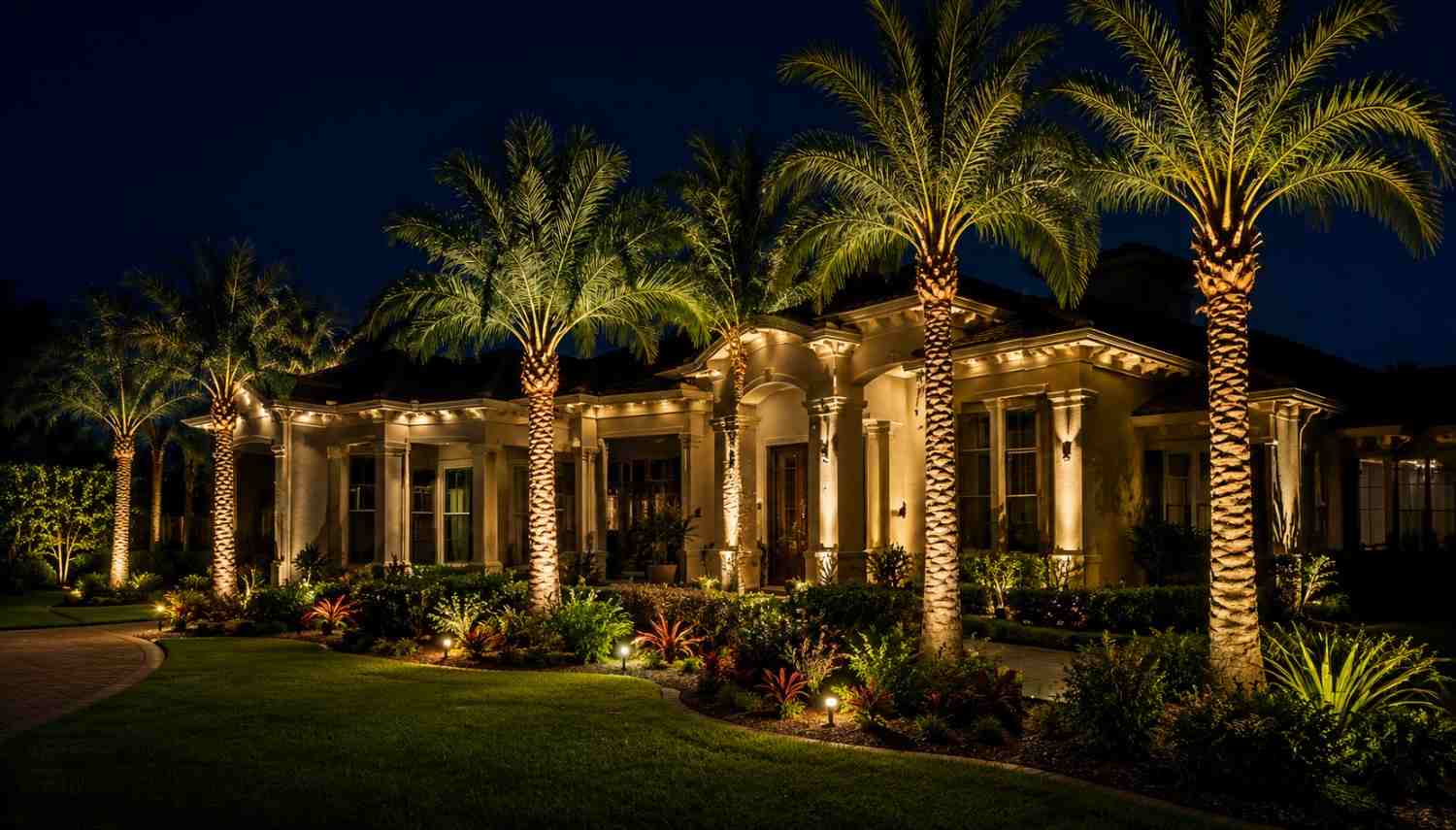
Landscape lighting improves visibility at entrances, walkways, steps, patios, and poolside areas. We help homeowners enjoy outdoor spaces comfortably after sunset. A well-planned system can highlight Phoenix landscaping and architectural details. It can also provide efficient LED controls and withstand heat, dust, irrigation, and monsoon weather.
Key Takeaways
- Landscape lighting improves nighttime curb appeal by highlighting palms, cacti, stonework, stucco, entries, and other key features.
- Layered lighting defines pathways, patio edges, gathering areas, and outdoor kitchens without flooding the yard with light.
- LED fixtures reduce energy use and limit bulb replacements. Timers, photocells, dimmers, and app controls add simple, convenient operation.
- Outdoor-rated components, protected wiring, precise fixture placement, and regular inspections help maintain reliable performance in Phoenix weather.
- Project costs and maintenance needs vary by property layout, fixture count, controls, installation requirements, and preferred features.
The Practical Benefits Homeowners Notice First
The primary landscape lighting benefits are a stronger nighttime presentation, better visibility around entrances and walkways, and outdoor spaces that remain comfortable to use after sunset. A thoughtful system gives the exterior a finished appearance while helping us move through key areas with more confidence.
We use landscape lighting to highlight plants, architecture, pathways, patios, and gathering spaces without turning the property into a brightly lit yard. A softly illuminated route from the driveway to the front door can make arrival easier. Lighting near stairs, patio transitions, and pool-adjacent spaces can help define changes in elevation and boundaries after dark.
Palm trees, cacti, stonework, stucco, and entry details can also take on a completely different presence at night. In backyard spaces, lighting can outline patio edges, outdoor kitchens, seating areas, and gathering zones. These are practical benefits of lighting your landscape, especially for Phoenix homes where outdoor living often continues well into the evening.
Lighting can improve visibility and make pathways easier to navigate, but it does not prevent crime, eliminate trip hazards, guarantee safety, or make a home secure. Good lighting supports awareness and usability. It works best alongside proper maintenance, clear walking surfaces, gates, and other appropriate property features.
Effective lighting is not simply brighter lighting. A layered plan balances visibility, ambiance, energy use, and respectful light levels for neighboring homes. For a broader look at exterior planning, see these outdoor lighting benefits.
Improve Curb Appeal and Highlight the Features We Enjoy
Curb appeal landscape lighting can improve the perceived presentation of a property after dark. It gives homeowners a way to carry the care shown in landscaping and exterior finishes into the evening. While lighting may make a property look more polished, we should not view it as a guaranteed increase in resale value or return on investment.
An effective outdoor landscape lighting design focuses attention on selected features rather than lighting every corner of the yard. Uplighting can emphasize the height and texture of palms, mature trees, desert plants, and planting beds. Downlighting can cast a gentle wash over pathways, courtyards, and entry areas. Path lights can establish clear movement from a driveway or sidewalk to the front door.
Landscape lighting for palm trees is especially popular in the Phoenix area because it draws attention to the tree’s height and sculptural trunk. We can also highlight cacti, stone veneer, stucco textures, columns, walls, front entries, driveways, pool areas, and backyard focal points.
Thoughtful fixture placement creates depth. Light and shadow reveal texture, define layers in the landscape, and prevent the flat appearance that comes from broad, overly bright illumination. Separate zones and appropriate controls also make it easier to shift the atmosphere for ordinary evenings, gatherings, or select celebrations. Homeowners considering a focused plan can explore our landscape lighting services.
Make Pathways, Patios, and Outdoor Living Areas More Usable After Dark
Outdoor living lighting supports the areas where we walk, cook, relax, and gather. Well-placed fixtures can improve visibility around paths, entrances, steps, patio transitions, seating zones, outdoor kitchens, gates, and pool-adjacent spaces without making the yard feel harsh or overlit.
Patio landscape lighting works best in layers. Low-level pathway lighting supports navigation. Accent lighting draws attention to plants, walls, and architectural focal points. Task-oriented illumination can serve an outdoor kitchen, gate, step, or specific seating area where additional visibility is useful.
This approach defines patio edges and gathering areas while preserving a comfortable evening setting. It also allows us to concentrate light where it matters instead of relying on one bright fixture that creates glare and deep shadows elsewhere. For additional planning ideas, review our backyard lighting ideas.
Landscape lighting and other exterior lighting options can work together, but they serve different purposes. Landscape lighting highlights plants, architecture, pathways, patios, and outdoor living areas. Permanent roofline holiday lighting primarily supports decorative holiday, event, and color-changing displays. Permanent outdoor lighting can be a separate addition for homeowners who want that flexibility. Bistro lighting provides ambient overhead light across a patio or gathering area, while security lighting generally emphasizes broad-area illumination or motion-activated visibility. Our security lighting options can complement pathway lighting, but they are not interchangeable.
Why LED Landscape Lighting Adds Long-Term Convenience
The benefits of LED landscape lighting include lower energy use and longer operating life compared with many older bulb types. That may mean fewer bulb replacements over time, especially across larger systems with multiple fixtures. Energy-efficient landscape lighting can be a practical choice for homeowners who use exterior lights regularly.
LED landscape lighting is not maintenance-free. Fixtures, wiring, transformers, lenses, connections, and controls still need quality installation and occasional attention. Dust, irrigation overspray, landscaping growth, and normal outdoor wear can all affect performance over time.
Convenient landscape lighting controls can make a system easier to manage. Depending on the installed setup, we can use timers, photocells, separate zones, dimming, and app-based outdoor lighting controls. These features help set schedules, adjust brightness for a gathering, and avoid leaving lights on longer than needed.
Energy use depends on fixture quantity, wattage, operating schedule, controls, and the overall system design. A properly planned layout focuses light where it is useful instead of adding fixtures without a clear purpose. Homeowners interested in control options can review our smart lighting automation services or learn how LED lighting design can support an outdoor space.
Choose a Design Built for Phoenix Heat, Sun, and Monsoon Weather
Phoenix landscape lighting needs to account for intense heat, strong UV exposure, dust, irrigation overspray, and monsoon weather. Outdoor-rated landscape lighting components help support reliable operation in these conditions, but fixture quality and installation methods matter just as much as the fixture’s appearance.
We place fixtures where irrigation, foot traffic, plant growth, and glare are less likely to create problems. Proper landscape lighting fixture placement includes aiming the beam carefully, selecting the right spread of light, and shielding fixtures where needed. That approach helps protect nighttime visibility and ambiance while limiting unwanted light spill onto neighboring properties.
Professional landscape lighting installation can include protected wiring and connections, appropriate transformer sizing, durable outdoor-rated materials, and lighting zones that suit the property. Each home has different pathways, landscaping, architectural elements, entertaining areas, power needs, and nearby homes to consider. A custom plan helps account for those details without assuming every property needs the same equipment.
Monsoon-resistant outdoor lighting also depends on periodic inspection after severe weather. Professional installation is a useful option for homeowners who want a durable, property-specific system, though simpler DIY options may work for smaller or temporary applications. For guidance on planning a cohesive layout, see why homeowners may hire a lighting designer.
What to Consider Before Installing Landscape Lighting
Is landscape lighting worth it? The answer depends on the goals for curb appeal, pathway visibility, outdoor living, convenience, and budget. A system makes the most sense when it supports areas we use regularly and highlights features that matter to the property.
Landscape lighting cost considerations vary widely. Property size, fixture quantity and quality, wiring needs, transformer capacity, control features, installation complexity, and the level of customization all affect the project scope. In Phoenix-area conditions, durable components and quality installation can be as important as the look of the fixtures themselves.
Landscape lighting maintenance is straightforward but ongoing. We recommend periodically checking fixture alignment, cleaning lenses when dust or debris reduces output, and adjusting lights as plants grow or landscaping changes. Wiring, connections, transformers, timers, and controls should also be inspected and repaired or replaced as needed.
Common Landscape Lighting Questions
What are the main benefits of landscape lighting? The main benefits include improved nighttime curb appeal, better visibility along pathways and entrances, more usable patios and outdoor spaces, and greater emphasis on landscaping and architectural features.
Is LED landscape lighting worth it? LED systems can be worthwhile for homeowners who value lower energy use, longer-lasting light sources, and control features. The right choice depends on the desired layout, operating habits, and budget.
Does landscape lighting use a lot of electricity? Energy use varies by fixture count, wattage, schedule, controls, and system design. LEDs and scheduling controls can help limit unnecessary operating time.
How often does landscape lighting need maintenance? We recommend periodic checks throughout the year and after severe weather. Lenses may need cleaning, fixtures may need realignment, and connections or controls may need attention as the system ages.
What areas of a yard should be illuminated first? Start with entries, primary walkways, steps, patio transitions, and the outdoor areas used most often. Next, add accents to key plants, trees, stonework, or architectural elements.
Can landscape lighting hold up in Phoenix heat and monsoon weather? It can perform well with outdoor-rated fixtures, protected wiring, proper connections, thoughtful placement, and regular maintenance.
What is the difference between landscape lighting and permanent holiday lighting? Landscape lighting focuses on plants, pathways, architecture, patios, and outdoor living spaces. Permanent holiday lighting focuses on roofline displays, color changes, holidays, and events.
For a Phoenix outdoor lighting consultation, we can help evaluate fixture placement, lighting goals, control options, and the most practical approach for the property. Contact us through our lighting consultation page to discuss the next steps.