
Commercial Outdoor Lighting Ideas for Businesses
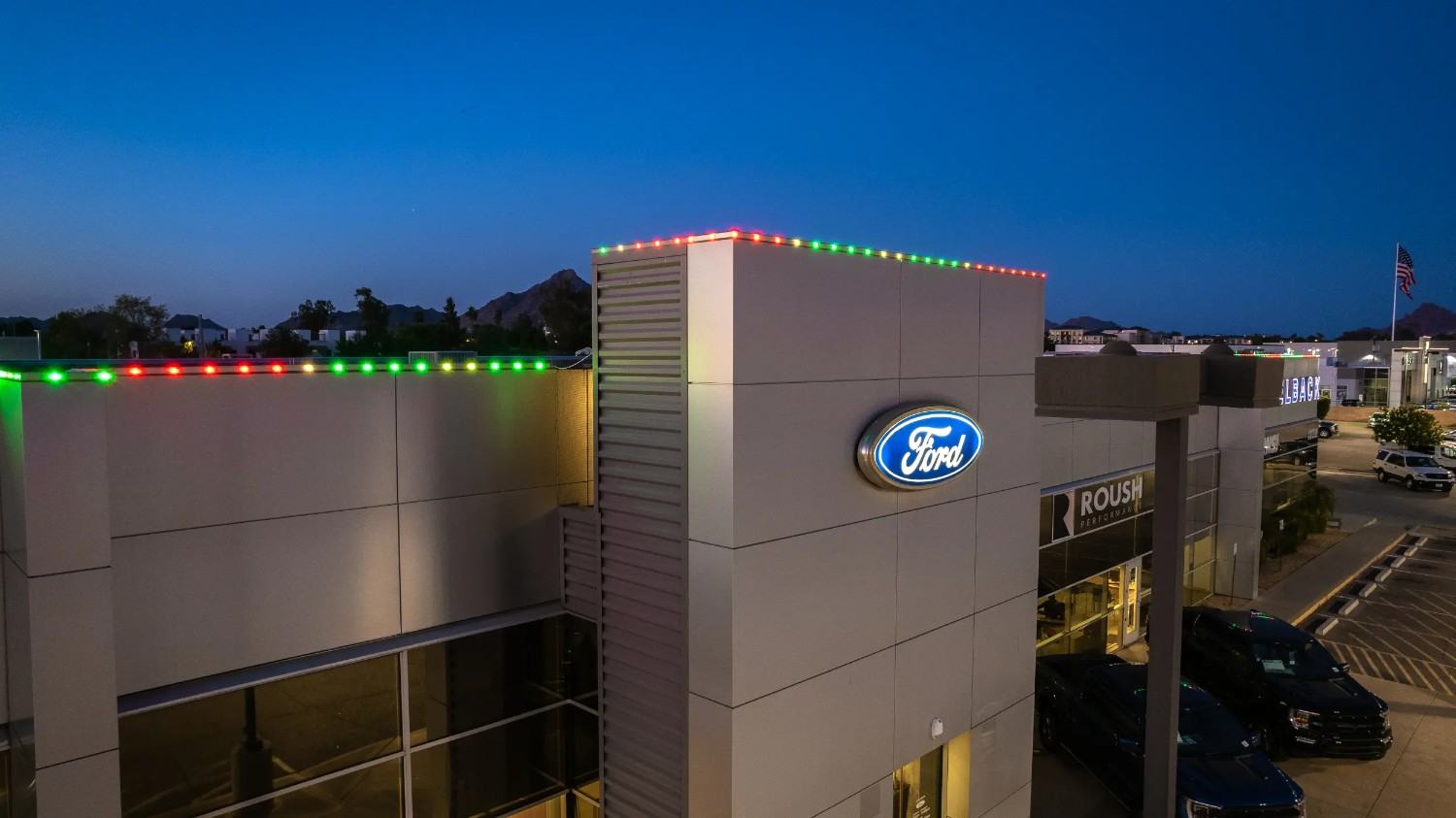
Commercial lighting plans prioritize entrances, walkways, parking areas, signage, and service zones. This approach improves visibility and wayfinding after dark. We also balance curb appeal, glare control, energy use, durable equipment, and practical controls for Phoenix conditions.
Key Takeaways
- We focus functional lighting on entrances, accessible routes, stairs, parking areas, loading zones, and other high-use outdoor spaces.
- We use shielding, accurate aiming, and balanced light levels to reduce glare and limit light spill onto neighboring properties and roads.
- We add façade, landscape, patio, and signage lighting where it improves curb appeal and supports comfortable after-hours use.
- We assess electrical capacity, controls, maintenance access, fixture durability, and installation demands before we select equipment.
- We confirm local electrical, zoning, accessibility, energy, and dark-sky requirements through a site-specific professional review.
Start With Visibility, Wayfinding, and Outdoor Use
Commercial outdoor lighting should do more than add fixtures around a building. We plan lighting around visibility, intended use, visual comfort, curb appeal, energy management, and the surrounding environment.
For business owners, commercial property managers, facility managers, and other decision-makers in Phoenix and Maricopa County, the first priorities are usually entrances, pedestrian routes, steps, ramps, parking areas, accessible paths, and transitions between bright and dark spaces. These commercial lighting ideas help people recognize where to go and use the property more comfortably after dark.
Exterior lighting can support visibility and may improve wayfinding. It does not guarantee safety, prevent crime, reduce liability, or automatically meet applicable code requirements. A thoughtful plan focuses light where people walk, drive, enter, work, and gather without creating uncomfortable glare or unnecessary spill.
Retail centers, office buildings, restaurants, hotels, medical offices, multifamily communities, warehouses, and similar properties all have different needs. Final fixture selection and placement require an on-site evaluation of the layout, existing electrical capacity, surrounding light levels, local requirements, and how each outdoor area will be used.
Outdoor Commercial Lighting Ideas by Priority Area
Strong outdoor commercial lighting ideas begin with the areas people rely on most. We prioritize functional zones before adding architectural or decorative lighting.
Entry and storefront lighting make a front door easier to find and help create a more welcoming arrival experience. The goal is clear visibility around doors, glass storefronts, address numbers, and entry features without aiming bright light directly into customers’ eyes.
Walkway, ramp, stair, and pathway lighting supports pedestrian movement along shared paths, building approaches, elevation changes, and accessible routes. Even lighting along the intended walking surface is generally more useful than isolated bright spots with dark gaps between them.
Parking-lot and parking-area lighting should account for drivers, pedestrians, vehicle movement, striping, curbs, and transition areas near building entrances. Brighter lighting is not always better. Excessive brightness and poor aiming can create glare that makes it harder for drivers and pedestrians to see comfortably.
Signage and monument-sign lighting can improve readability and business identification for customers, tenants, guests, and delivery drivers. A properly illuminated sign supports wayfinding while protecting the sign face from uneven hot spots and light spill.
Loading zones, service entrances, back-of-building spaces, perimeter areas, and access points often need practical operational visibility. These areas may benefit from carefully placed lighting, especially where staff, vendors, and deliveries operate after dark. Perimeter and access-point lighting are visibility measures, not assurances of security or crime prevention. Properties with specific concerns can explore security lighting options as part of a site-specific plan.
A useful side-by-side visual for this section compares balanced illumination with harsh glare. The balanced example should show light directed onto walkways, parking surfaces, and entrances. The glare example should show unshielded fixtures shining into pedestrian and driver sightlines. This comparison makes the value of shielding, aiming, and beam control easy to understand.
Lighting Ideas for Curb Appeal, Patios, and After-Hours Experiences
Commercial exterior lighting ideas can also improve how a property looks and feels after sunset. We use accent lighting to define the building, support a recognizable brand presence, and make outdoor spaces more usable without over-lighting the site.
Facade lighting can draw attention to architectural features, columns, textures, rooflines, and primary entrances. The best approach highlights selected details rather than washing every wall with light. A carefully planned LED lighting design can balance focal points with practical nighttime visibility.
Patios, courtyards, outdoor dining areas, employee gathering spaces, and event areas benefit from layered lighting. Low-glare path lights, wall-mounted fixtures, string lighting where appropriate, and focused accents can create a comfortable atmosphere while preserving visibility around seating, doors, and steps. Restaurants and hospitality properties can use commercial outside lighting ideas to extend the appeal of outdoor areas during Phoenix’s long outdoor-use seasons.
Landscape, tree, and feature lighting add depth around entrances, amenity areas, and gathering spaces. We can use landscape lighting to define boundaries, frame a pathway, highlight specimen trees, or soften the look of a large building facade. Property teams can also review outdoor landscape lighting ideas for inspiration that fits commercial environments.
Retail properties often focus on storefront visibility, entries, signage, and customer parking. Restaurants may prioritize patios, outdoor dining ambiance, pedestrian routes, and entry lighting. Office and medical buildings commonly need clear wayfinding, accessible routes, entry visibility, and parking-area coverage.
Multifamily communities often benefit from lighting at shared paths, building entrances, amenity spaces, and landscaping. Warehouses and industrial sites may need focused lighting around loading zones, staff entrances, access routes, and operational areas. Hotels can use exterior lighting to strengthen the arrival experience, define pathways, highlight amenity areas, and support exterior branding.
Helpful original visuals include a well-lit commercial entrance, an outdoor restaurant patio, a pedestrian walkway, a monument sign, and facade accent lighting. These images should show realistic lighting levels and controlled glare rather than heavily edited nighttime scenes. Our lighting project gallery can also help property teams compare styles and applications.
Plan the System Before Choosing Fixtures
We start with property goals and priority zones. A plan should identify which locations need better visibility, wayfinding, outdoor usability, architectural emphasis, or decorative accents. This step prevents a fixture-first approach that can lead to uneven lighting, wasted energy, and difficult maintenance.
Existing electrical capacity and infrastructure should be evaluated before finalizing the scope. We do not recommend universal fixture spacing, brightness levels, mounting heights, or installation methods because every commercial property has different electrical conditions, layouts, uses, and constraints.
Light direction, beam spread, shielding, and aiming deserve close attention. Fixtures should illuminate intended surfaces while managing glare for pedestrians and drivers. The plan should also consider spill onto neighboring properties, public areas, and nearby roads. Consistent color temperature and a unified lighting appearance help the property feel organized rather than pieced together.
Controls can make daily operation easier and reduce unnecessary run time. Depending on the property, suitable options may include operating schedules, timers, photocells, zoning, dimming, and app-based controls. Our smart lighting automation options can help property teams manage separate areas without treating the entire site as one lighting zone.
Maintenance access belongs in the first plan, especially for high-mounted fixtures, parking areas, facades, and difficult-to-reach locations. More light is not automatically better. A balanced system accounts for visual comfort, driver visibility, neighboring properties, and the surrounding environment.
Choose Durable, Manageable Lighting for Phoenix Conditions
Phoenix-area commercial properties face extreme heat, direct sun exposure, dust, wind, monsoon weather, and extended outdoor-use seasons. We recommend weather-appropriate components designed for intense heat, UV exposure, dust, wind, and monsoon conditions.
Equipment placement, sealing, wiring protection, and routine inspection all matter in desert conditions. Product specifications should support any claim that a fixture is appropriate for local conditions. A fixture’s appearance alone does not confirm its long-term suitability.
Long-term ownership includes fixture durability, replacement needs, energy use, control options, cleaning requirements, maintenance access, and expected lifespan. Existing properties may also benefit from LED retrofit upgrades when older equipment uses more energy, provides inconsistent illumination, or no longer supports practical controls.
Project costs vary based on property size, fixture type and quantity, control systems, electrical upgrades, site access, installation complexity, and maintenance needs. A site review gives us the information needed to discuss appropriate options without relying on generic pricing assumptions.
Permits, Professional Planning, and Questions to Ask Before Requesting a Quote
Applicable requirements can vary by property type, municipality, fixture location, electrical scope, and surrounding conditions. We recommend confirming electrical, zoning, dark-sky, accessibility, energy, and local requirements with qualified local professionals and relevant authorities. A lighting plan should not assume universal compliance.
Professional planning and installation may be especially helpful for line-voltage electrical work, parking areas, multiple lighting zones, integrated controls, difficult access, existing infrastructure issues, and questions about local requirements. Some small decorative projects may be manageable without extensive coordination, but commercial work often requires a property-specific evaluation and careful installation planning.
Questions to Ask Before Requesting a Quote
Before scheduling an assessment, we recommend gathering the following details:
- Which areas need better visibility or wayfinding after dark?
- Who uses the space at night, including customers, tenants, staff, guests, delivery drivers, or residents?
- Which areas need functional lighting, and which need decorative accent lighting?
- Are glare, neighboring properties, or nearby roads a concern?
- What controls or schedules would make the system easier to manage?
- Are electrical upgrades or repairs likely to be needed?
- What maintenance access and long-term service plan will the property need?
We recommend that a qualified lighting designer, licensed electrical professional, or experienced commercial lighting installer review the final scope before installation. This article provides general planning guidance and does not replace a site evaluation or local requirement review.
Trimlight Phoenix offers commercial outdoor lighting services for properties that need a practical, property-specific plan. Commercial owners and managers can request a lighting assessment to discuss property goals, existing conditions, controls, durability needs, and appropriate installation options.