Color Changing Outdoor Lighting for Every Occasion
Color-changing outdoor lighting gives Phoenix-area homeowners one roofline system for holidays, celebrations, game days, and subtle daily curb appeal. We professionally plan permanent lighting to reduce seasonal setup. Selected systems can provide app controls, saved presets, zones, and schedules.
Key Takeaways
- We can use seasonal colors and patterns for holidays, family events, graduations, birthdays, and neighborhood gatherings. Homeowners avoid installing temporary strands for every occasion.
- Soft white lighting and restrained color combinations can create everyday roofline accents that complement a home’s architecture.
- App-based controls can let us select colors, save presets, manage lighting zones, and schedule routines. Available features depend on the system configuration.
- Permanent lighting stays installed throughout the year. Temporary lights require a lower initial investment, but they need repeated setup, removal, and storage.
- Installation scope and pricing depend on roofline size, roof complexity, story count, access, electrical requirements, lighting zones, and added landscape or patio lighting.
Ways to Use Color Changing Outdoor Lighting Throughout the Year
Color changing outdoor lighting gives Phoenix-area and Maricopa County homeowners a flexible way to update a home’s appearance throughout the year. We can use the same professionally installed roofline system for holidays, family events, game days, and understated nightly curb appeal.
For holiday displays, coordinated colors make it easy to shift from red and green at Christmas to orange and purple for Halloween, red, white, and blue for Independence Day, or soft pastels for Easter. Valentine’s Day, fall gatherings, and other seasonal moments can have their own look without repeatedly hanging, removing, and storing temporary strands. For more ideas, see these outdoor holiday lighting ideas.
Outdoor color changing lighting also works well for birthdays, graduations, anniversaries, houseguests, and family celebrations. Favorite colors, school colors, or a simple celebratory pattern can make the exterior feel prepared for the occasion without adding extra decorating work.
Game days and neighborhood events are another natural fit. We can set team-inspired colors for a watch party, support a local event, or give a gathering a coordinated look. The goal is simple: use light as part of the atmosphere without making the home feel overdone.
Everyday use can be much quieter. Soft white lighting or restrained color selections can define rooflines and add visible curb appeal after dark. Color should support the home’s architecture rather than turn every evening into a holiday display. A thoughtful LED lighting design helps balance visibility with a polished appearance.
For entertaining, roofline lighting creates a festive overall exterior, while patios often need additional lighting closer to seating and dining areas. Bistro-style fixtures and landscape lighting can provide more direct ambiance around tables, pathways, plants, and outdoor living spaces. Results vary based on roofline design, home color and materials, fixture placement, nearby ambient light, landscaping, viewing distance, and the selected system.
How Color Changing Lighting Controls, Presets, and Zones Work
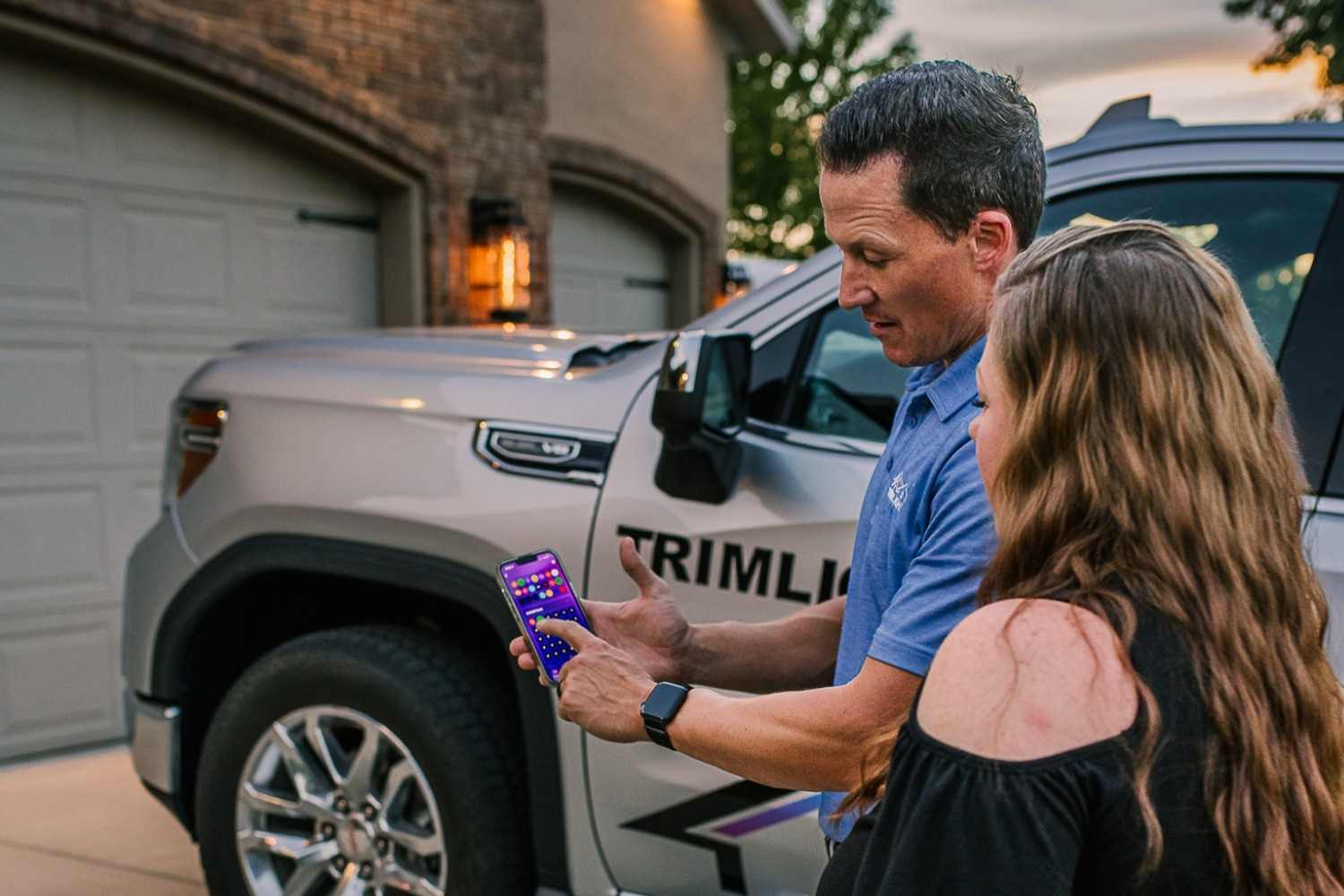
Many color changing outdoor lighting systems allow homeowners to control displays from a phone or app, depending on the selected product and configuration. This convenience lets us adjust the home’s look without climbing ladders or manually changing individual bulbs.
A zone is a separately controlled lighting section, such as a front roofline, garage area, upper roofline, or another portion of the home. Systems that support zones can show different colors or effects in different areas at the same time. This can be useful for larger homes or for displays that need a focal point.
A preset is a saved combination of colors, patterns, or display settings. Once a preset is created, we can select it again without rebuilding the display. Scheduling means setting the lights to turn on, turn off, or change displays at chosen times.
Features vary by system. Depending on the setup, homeowners may be able to select colors, choose patterns, save presets, manage zones, and schedule routines. App-based control is common, but the available controls depend on the product and installation plan. For homeowners who prefer convenient routines, smart lighting automation can help simplify regular use.
Subtle colors can work very well for everyday curb appeal. We generally recommend starting with soft white or restrained combinations, then using brighter displays for holidays and celebrations. The right level of customization depends on whether homeowners want simple presets, scheduled routines, or more hands-on display control.
What Permanent Outdoor Lighting Means—and When It Fits Your Home
Permanent lighting is professionally mounted lighting that remains in place year-round. Unlike temporary strands, it does not need to be installed, removed, and stored for each season. Permanent roofline lighting is often used for holidays, celebrations, architectural accents, and ongoing curb appeal.
Color changing roofline lighting is one option within a broader outdoor lighting plan. It works especially well for outlining the home and creating visible color from the street. Homeowners considering this approach can explore permanent holiday lighting options that support year-round use.
Other lighting types serve different purposes. Landscape lighting can illuminate trees, plants, architectural features, walkways, and key outdoor areas. Patio or bistro lighting supports dining and entertaining zones. Palm tree lighting can highlight prominent palms and create a focal point in a Phoenix outdoor living space. Many homes benefit from combining roofline lighting with landscape lighting rather than expecting one lighting type to address every goal.
During a professional consultation, we evaluate rooflines, access, desired lighting locations, control preferences, visibility goals, and project complexity. The right configuration depends on the home, the desired appearance, and how the space will be used.
Permanent Lighting vs. Temporary Seasonal Lights
Permanent and temporary lights can both be appropriate choices. The better option depends on budget, decorating preferences, desired controls, and how much annual setup work homeowners want to handle.
Temporary lights require recurring installation and removal. They also need storage space for strands, clips, accessories, and other seasonal materials. Permanent lighting stays mounted year-round, which reduces the need to handle and store seasonal lighting each year.
A professionally planned permanent system can provide a consistent roofline layout and convenient control options. Temporary lighting offers flexibility for homeowners who enjoy changing their approach from season to season or who prefer a lower upfront investment. Permanent lighting may be worth considering for those who value a planned layout, less annual decorating work, and the ability to use lighting beyond the holiday season.
We recommend comparing the upfront investment with the value of convenience, appearance, available controls, and long-term use. A discussion of permanent outdoor lighting can help clarify which approach fits the home and household routine.
Planning the Look, Installation, and Project Scope
Outdoor lighting color changing systems should fit the home layout, lifestyle, visibility goals, and budget. Professional planning starts with the roofline, then considers how lighting will appear from the street, driveway, patio, and nearby viewing areas.
Project scope commonly depends on home size, roofline length and complexity, number of stories, accessibility, system type, number of lighting zones, electrical considerations, and additional lighting elements. Exact pricing should follow an evaluation of the specific home and planned layout rather than a one-size-fits-all estimate.
Placement also matters. Roofline shape, home materials and colors, fixture spacing, street lighting, nearby landscape lighting, and viewing distance all affect the final appearance. Phoenix-area roofline styles and neighborhood visibility can influence the preferred brightness, color use, and fixture placement.
We plan installations to support both dramatic event displays and comfortable everyday use. Homeowners can learn more about available outdoor lighting services before deciding whether roofline lighting, landscape lighting, or a combined plan makes the most sense.
Common Questions About Outdoor Lighting Color Changing
Practical Answers for Phoenix-Area Homeowners
These common questions can help homeowners compare options and plan a lighting system with confidence.
- Can outdoor color changing lights be controlled from a phone? Many systems allow app-based control for color selection, presets, zones, and schedules, depending on the product and configuration.
- Are permanent outdoor lights only for holidays? No. Permanent roofline lighting can support celebrations, game days, seasonal palettes, welcoming guests, outdoor entertaining, and subtle architectural accent lighting.
- Can we use subtle colors for everyday curb appeal? Yes. Soft white and restrained color combinations can look polished, though the final effect depends on home design, placement, ambient light, and viewing distance.
- What affects installation cost? Home size, roofline length and complexity, number of stories, accessibility, system type, lighting zones, electrical considerations, and added lighting elements all influence project scope.
- Is professional installation worth considering? It can be helpful for homeowners who want a planned layout, safe access planning, consistent placement, and guidance on controls and visibility goals.
- Can roofline lighting be combined with other lighting? Yes. A combined plan may include landscape, patio, or palm tree lighting to better support curb appeal and outdoor living goals.
If we are considering color changing outdoor lighting for a Phoenix-area home, Trimlight Phoenix can help evaluate the roofline, lighting goals, and available options during a lighting consultation.