
What Are the Best Outdoor Landscape Lighting Ideas?
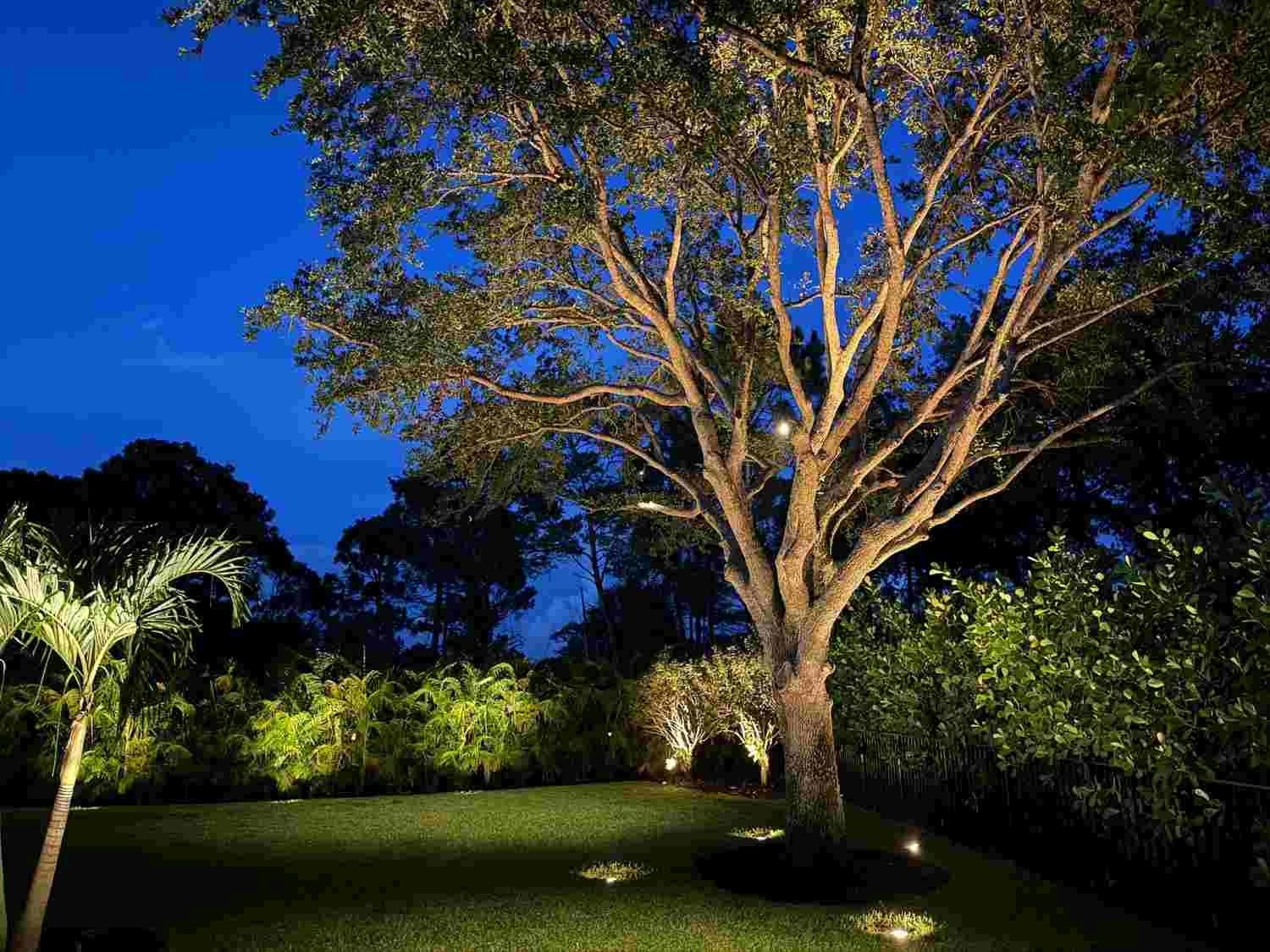
The strongest outdoor landscape lighting plans layer shielded fixtures for safer paths and steps. We can also highlight select architectural details, trees, patios, and desert plants. A thoughtful Phoenix lighting plan accounts for heat, dust, irrigation, plant growth, glare, and easy daily control.
Key Takeaways
- Prioritize entries, walkways, steps, gates, driveways, and grade changes for clear nighttime visibility and safer movement.
- Combine safety, ambient, accent, and architectural lighting rather than relying on a single bright fixture.
- Use focused uplights, downlights, and wall-wash fixtures to feature palms, cacti, stonework, patios, and focal points without flooding the property with light.
- Select durable, outdoor-rated fixtures and protected connections that withstand Phoenix sun, heat, dust, irrigation, and monsoon conditions.
- Consider professional design support for large layouts, hardwired systems, pool-adjacent spaces, integrated controls, and established landscaping.
Start With Your Outdoor Landscape Lighting Goals
Outdoor landscape lighting ideas work best when we plan around how homeowners use a property after dark. Adding fixtures without a clear purpose can create glare, dark gaps, and a cluttered appearance. We start with the routes, gathering spaces, views, and landscape features that matter most.
A simple planning chart can guide the first design conversation:
- Goal: Safer walking routes. Lighting approach: path lighting, step lighting, and downlighting. Best areas: sidewalks, garden paths, stairs, entries, and routes between the driveway, gate, patio, and home.
- Goal: Curb appeal. Lighting approach: architectural uplighting, wall washing, and façade accents. Best areas: front elevations, columns, stonework, textured stucco, and entry features.
- Goal: Outdoor entertaining. Lighting approach: patio lighting, bistro lighting, soft perimeter lighting, and task lighting. Best areas: patios, pergolas, dining spaces, seating zones, and outdoor kitchens.
- Goal: Landscape features. Lighting approach: tree lighting, palm tree lighting, garden accents, and focal-point lighting. Best areas: specimen trees, agave, cacti, rock features, planters, and art.
- Goal: Better property orientation. Lighting approach: driveway, gate, retaining-wall, and fence lighting where needed. Best areas: boundaries, transitions, side yards, and arrival areas.
The strongest landscape lighting outdoor lighting ideas use layers rather than one bright source. Subtle, shielded fixtures create comfortable visibility and a more polished nighttime appearance. This approach also gives us greater control over contrast, shadows, and the view from inside the home.
Light the Areas That Matter Most for Safety, Curb Appeal, and Navigation
Path lighting gives walkways and garden paths a clear visual route while adding a finished look to front-yard landscaping. We commonly place it along sidewalks, transitions from the driveway to the entry, routes to patios, and paths leading to gates. Proper path lighting helps people move confidently without overpowering plants, windows, or nearby seating areas.
Fixture placement matters as much as fixture selection. We avoid exposed bulbs in the normal line of sight, overly dense layouts, and uneven pools of light that leave hazards between fixtures. Irrigation lines, plant growth, and future maintenance access should shape the final layout.
Steps, entries, gates, driveway edges, and elevation changes deserve early attention. These are the places where missed steps, unclear boundaries, and poor visibility can become most noticeable after dark. Carefully aimed lighting makes entrances feel welcoming and supports safer movement through the property. We also manage aiming carefully so drivers, visitors, and neighbors do not face unnecessary glare.
Architectural lighting can add depth and curb appeal without making the entire façade equally bright. Uplighting draws attention to columns, stone, walls, and selected entry details. Wall washing creates a soft, even glow across a broad surface. Grazing places light closer to a textured surface, which brings out materials such as stone or stucco.
A balanced Phoenix outdoor lighting plan uses contrast intentionally. We prevent spill into windows and avoid lighting every detail with the same intensity. That restraint keeps the home attractive from the street and comfortable from indoors.
Highlight Trees, Desert Landscaping, Patios, Pools, and Entertaining Areas
Desert landscaping can look especially striking at night when we light a few defining features rather than every plant. Palm tree lighting can show off the height and shape of mature palms, while focused uplights can add dimension to specimen trees, agave, cacti, distinctive boulders, and garden focal points.
We account for palm growth, pruning access, irrigation, mature root systems, nearby windows, and changing plant shapes before finalizing fixture locations. Excessively bright uplighting can create harsh shadows and distracting glare, so controlled output and thoughtful aiming remain essential.
Downlighting offers a softer alternative for patios, seating areas, and walking zones. Mounted from an appropriate elevated location, it can create a gentle moonlit effect without placing visible fixtures throughout the landscape. Access for service, tree growth, wind movement, and aiming all affect long-term performance.
Patio lighting should support the way homeowners actually use the space. We combine task lighting for cooking and serving, ambient lighting for dining and seating, and accent lighting for planters, walls, or nearby landscape details. This layered approach keeps outdoor kitchens functional without making a patio feel like an indoor work area.
Bistro lighting adds a relaxed social atmosphere to pergolas, covered patios, and informal gathering spaces. It works best as one part of a broader design. Secure mounting, weather exposure, access routes, and the need for practical task lighting should all be considered before installation.
Pools, water features, art, fences, retaining walls, and property edges can also benefit from selective illumination. We use light where it improves orientation, visual depth, or focal-point visibility. Pool-adjacent areas and water features may require added planning and applicable local requirements. We avoid glare reflecting off water and make sure walking surfaces receive appropriate attention.
For coordinated year-round solutions, our landscape lighting services can bring these layers into one cohesive property plan.
Use Design Principles That Create a Polished Look Without Overlighting
Effective outdoor lighting design uses four functional layers. Safety lighting supports paths, steps, entries, gates, and driveways. Ambient lighting provides comfortable general illumination for patios and seating areas. Accent lighting highlights trees, desert plants, art, water features, and focal points. Architectural lighting emphasizes walls, columns, rooflines, and façade details.
Purposeful illumination is usually more effective than flooding the yard with light. We use warm color temperatures for a welcoming residential appearance and choose shielded fixtures that direct light where it is useful. Keeping direct bulbs out of normal sightlines makes the space more comfortable for homeowners, guests, neighbors, and drivers.
Strong outdoor landscape lighting design ideas also preserve darker areas. Darkness creates contrast, helps focal points stand out, and prevents a flat, overly bright yard. Before approving placement, we check important views from bedrooms, living areas, patios, and the street.
Common problems often come from treating brightness as the goal. Too many fixtures can overwhelm a landscape. Poor aiming can shine into windows or across property lines. Even a well-chosen fixture can become ineffective if plants grow over it or if maintenance access becomes difficult. Planning for the landscape’s future prevents these problems.
Plan for Phoenix Heat, Sun, Dust, Monsoons, and Easy Controls
Phoenix conditions place real demands on outdoor fixtures and connections. We recommend durable, outdoor-rated components with protected connections and materials suited for high heat, intense UV exposure, dust, irrigation, and monsoon weather. Finishes also matter because prolonged sun exposure can affect the appearance of exterior materials.
Landscape lighting should adapt as the property changes. Desert plants grow, palms are trimmed, irrigation layouts shift, and patio areas may be updated. We avoid treating every fixture location as permanent if landscaping is likely to expand or be redesigned.
Convenient controls make a lighting system easier to enjoy. Timers can provide predictable daily operation. Zoned controls can separate front-yard, backyard, patio, and feature lighting. App-based controls, scheduling, dimming, and seasonal adjustments may also be available depending on the selected system. We confirm available features based on the chosen equipment and current Trimlight Phoenix offerings. Our smart lighting automation options can help simplify daily control.
Landscape lighting differs from permanent roofline lighting. Landscape systems focus on year-round safety, ambiance, visibility, and plant or architectural accents. Permanent outdoor lighting along rooflines is generally used for holidays, celebrations, exterior color customization, and architectural outlining. Both can work well on the same property, but each serves a different purpose and benefits from separate planning.
Decide Between DIY and Professional Landscape Lighting Installation
DIY installation can suit small, simple projects with limited goals, such as lighting a short walkway or adding a few accents to a compact patio. Larger properties and integrated systems often benefit from professional planning. This is especially true with multiple lighting layers, hardwired systems, coordinated controls, challenging access, mature trees and palms, pool-adjacent areas, and complex desert landscaping.
Project scope and investment depend on the design, fixture selection, access, electrical needs, existing power access, property size, landscaping, and local requirements. A clear property assessment helps identify what should be done first and what can be added later.
Questions to Ask and Common Landscape Lighting FAQs
Before choosing an installer, we recommend asking clear questions about the design and long-term service plan:
- Will the assessment cover pathways, steps, gates, driveways, patios, and entertaining areas after dark?
- Which fixture materials and finishes suit Phoenix heat, UV exposure, dust, and monsoon weather?
- How will the design control glare around windows, neighbors, and drivers?
- How are wires and connections protected around irrigation, landscaping, and weather exposure?
- Can the system use timers, zones, app-based controls, scheduling, or dimming where available?
- How can the plan adapt as palms, trees, and desert landscaping mature?
- What warranty details, service expectations, and maintenance needs apply to the confirmed system?
What outdoor areas should be lit first? We prioritize safety-related routes and transitions, including entries, walkways, steps, gates, driveways, and major elevation changes.
How can we improve a yard’s nighttime appearance without making it too bright? We use targeted, shielded layers and focus on a limited number of key paths, architectural details, and landscape features.
What color temperature is typical for outdoor landscape lighting? Warm color temperatures are commonly used for a welcoming residential appearance. The right selection depends on the home’s materials and the desired atmosphere.
Can landscape lighting work with desert landscaping and palm trees? Yes. Good placement accounts for irrigation, heat, dust, maintenance access, plant growth, and the changing shape of mature palms and trees.
Is landscape lighting different from permanent holiday lighting? Yes. Landscape lighting supports year-round safety, ambiance, and feature illumination. Permanent roofline lighting commonly supports holidays, celebrations, color customization, and architectural outlining.
When is professional installation worth considering? It can be helpful for complex layouts, multiple layers, pool-adjacent areas, hardwired systems, coordinated controls, difficult access, and homeowners who want a cohesive plan.
We can help evaluate the property, lighting goals, installation considerations, and available options through an outdoor lighting assessment.